

What is Happy Balloon or Laughing Gas?
If you’ve spent any amount of time in backpacker towns, music festivals, or the messier corners of the internet, you’ve probably heard of something called the “happy balloon.” It sounds pretty harmless, almost cute, like something you’d find at a kid’s birthday party.
The truth is, the happy balloon is not a new thing; it has been around for a long time. But if you’re late to the party (which I absolutely was), this is a straightforward explanation of what it is, why people try it, and what my experience was like.
So… what is a “happy balloon”?
Despite the cheerful name, the happy balloon isn’t a toy. It’s a balloon filled with nitrous oxide, more commonly known as laughing gas.
Yes, that laughing gas. The same one you hear about at the dentist.
But instead of being used medically, it sometimes shows up in nightlife or backpacker-heavy areas as a recreational thing. The balloon is just a container. The actual substance is the gas inside.
What is laughing gas, exactly?
Laughing gas is the informal name for nitrous oxide (N₂O). In medical settings, it’s used as a mild anesthetic or pain reliever, especially in dentistry.
Personally, I’ve never been given laughing gas at the dentist. Which makes me wonder how anyone gets any dental work done if they’re giggling the entire time.
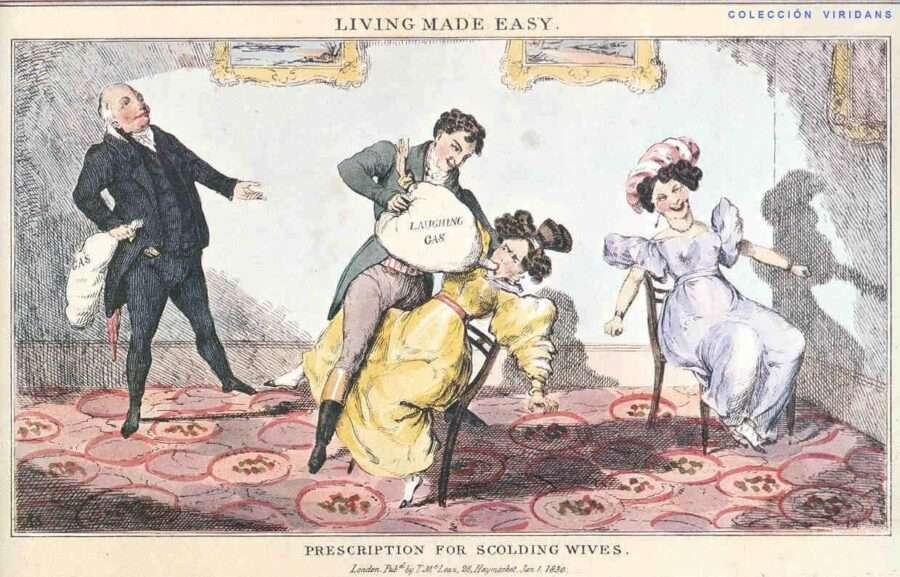
Outside of clinics, nitrous oxide has legitimate industrial and culinary uses — it’s commonly used in whipped cream dispensers. Now that explains why I always feel happy after eating whipped cream.
At room temperature, the gas is colorless, non-flammable, and slightly sweet-smelling. When inhaled recreationally, the effects are short-lived, usually lasting only seconds.
This short duration is part of why its legal status varies by country, often changing and falling into a regulatory gray area rather than being clearly legal or illegal.
Where people find happy balloons
Apparently, you can find happy balloons everywhere, from Europe to Asia, especially in party places like music festivals and nightclubs. In Asia, it seems to have become a big thing in Vietnam, Laos and South Korea.
I personally encountered it in Vang Vieng, Laos, the backpacker capital of Laos.
There was a café on the main street that specialized in “happy” menu items — happy omelets, happy pancakes, happy pizza, happy coffee. Basically, if it could be made happy, it was.
Earlier that day, I’d tried their mushroom shake (curiosity is my strongest personality trait) and liked the result. So, later that night, I went back to buy a slice of space brownie to take away. While waiting, I noticed the happy balloon option, and again, curiosity won.

My happy-balloon experience
I had to wait a little while for my happy balloon, because it seemed like it was not easy to prepare and not all of the staff members knew how.
After some time, the cafe owner himself came to serve the balloon to me. It was yellow, with splashes of paint on it.
He told me it had to be consumed on-site. Whether that was a legal requirement or just practical business sense, I didn’t ask.
At first, I was cautious, taking only teeny-weeny sips from the balloon, but I didn’t feel anything at all.
Finally, after a few more failed attempts, I braced myself and finished the gas in two deep inhales. The effect hit me immediately but went away just as quickly — I think about 15 seconds, tops.
What stood out to me was how fast it was, unlike edibles that make you wait and wait until suddenly bam, hallucinations!
Despite its name, it didn’t make me laugh. There were no interesting visuals or grand epiphanies about the universe — more like a sudden, fleeting rush of euphoria. I was smiling so wide, my cheeks hurt.


A necessary word about safety
While nitrous oxide is often described as “low risk,” that doesn’t mean no risk. Repeated or improper use has been linked to health issues, including vitamin B12 depletion, psychological dependence, psychosis, limb spasms, and other neurological problems.
Improper handling of canisters can also be dangerous. Overdoses, although extremely rare, can be fatal. And it must never be attempted by anyone with pre-existing respiratory issues.
This isn’t encouragement, advice, or a guide. Please refer to the disclaimer at the bottom of this page.
Final thoughts
If you’re expecting a life-altering experience, this isn’t it. The happy balloon didn’t unlock my third eye, cure my existential dread, or make me more fabulous than I already am. It lasted about as long as a yawn, except a little more expensive.
Would I go out of my way to do it again? Probably not. It was just one of those backpacker-era experiences that makes sense only in the moment, when curiosity is high and common sense is on holiday.
Am I glad I tried it? Sure. Just so I don’t have to wonder about it anymore. And now you don’t have to either.
Have you ever come across happy balloons or something similar while traveling? I’m curious what your experience was — or if you wisely decided to just stick to whipped cream.
You might also like:


Pingback: Tubing in Vang Vieng – An Activity That Could End in Tragedy…Or Comedy | Ummi Goes Where?
Pingback: What It’s Like to Eat “Space Brownie” (Ahem… it’s not your typical dessert) | Ummi Goes Where?