

Mount Rinjani Hike Guide: Routes, Costs, Packing List & What to Expect
Mount Rinjani is an active volcano on the island of Lombok, just east of Bali, Indonesia. At 3,726 meters (12,224 ft) above sea level, it’s the second highest volcano in Indonesia after Mount Kerinci.
But the real showstopper isn’t the summit.
It’s the massive 6 x 8.5-kilometer (3.7 x 5.3 mi) caldera, partially filled by a sapphire-blue lake called Segara Anak. The lake is so wide it actually holds its own baby volcano in the center.
At around 2,003 meters (6,572 ft) above sea level, Segara Anak is the world’s highest caldera lake with an active volcano in it. It’s estimated to be about 200 meters (656 ft) deep.
Like most hikers, the lake was my main reason for climbing Rinjani. I’m the sort who will only climb something if I know the view is going to be worth it.
And Rinjani absolutely delivered.
Affiliate disclosure
Some links in this post are affiliate links, including Amazon Associates and other programs. That means if you buy through them, I may earn a small commission at no extra cost to you.
How to get to Mount Rinjani
Mount Rinjani is located in Lombok, Indonesia.
The nearest airport is Lombok International Airport (LOP). There are direct flights from Kuala Lumpur, Singapore, and several Indonesian cities including Jakarta, Bali, and Surabaya.
You can also reach Lombok by boat from Bali, which takes roughly 4–5 hours depending on sea conditions.
There’s no public transportation to Mount Rinjani. Most hikers book a package tour, which includes transfers, permits, guides, porters, meals, and camping equipment.
I stayed in Senggigi, one of the busiest tourist spots on the island. There are tour agents pretty much everywhere, or you can book one through your hotel concierge.
But if you’re traveling during peak season (July–August especially), I’d recommend booking your Rinjani trek in advance. Spots can fill up quickly, and the better operators often get fully booked days ahead.
You can check availability and compare verified tour operators here:
Can you climb Mount Rinjani without a guide?
Although you might read some older blog posts claiming they managed to sneak past security and climb on their own, I strongly advise against it.
Park authorities have stepped up enforcement, and trying to bypass official checkpoints is unsafe, illegal, and undermines the efforts to keep the trails and environment protected.
Always plan your trek through a registered guide or operator. They know the route, local weather patterns, emergency procedures, and how to navigate the park’s permit system.
Best time to climb Mt Rinjani
The Rinjani trekking season typically runs from April to December.
The mountain is usually closed from January to March due to monsoon rains. Trails become dangerously slippery, and landslides are a real risk.
I climbed in September. It drizzled just as we were about to reach our campsite at the crater rim, and even light rain at that altitude makes everything feel dramatically colder.
In general:
- April to June is considered the best time to climb Mount Rinjani as it’s the end of the rainy season and the beginning of the hiking season.
- July and August are the peak period, which will often see a surge of hikers.
- September through December is also a good time to go.
Always doubly-check official announcements before booking
Senaru vs Sembalun route: which one should you choose?
There are two different routes for climbing Mount Rinjani, each one on a different side of the mountain:
Sembalun route
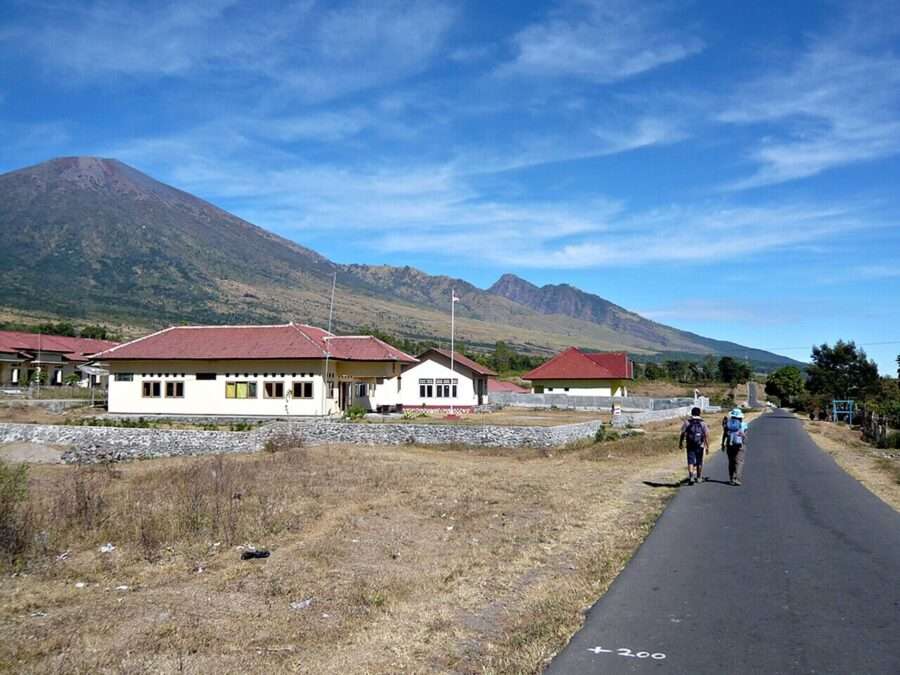
The Sembalun route will take you through mostly flat grasslands to the base of the summit. So, it’s said to be easier than Senaru.
The only downside to this route is that you’ll be exposed to the hot sun the whole time, so make sure you bring a hat, sunglasses, and sunscreen.
Senaru route
The Senaru route features a steeper, non-stop climb through rainforest, with some rocky terrain in the final stretch. The upside is that it’s shadier and, if you prefer rainforests over grasslands, arguably more beautiful.
Aesthetically speaking, I probably would have preferred Sembalun, since I don’t get to see many grasslands back home. But your homegirl does not enjoy baking under the sun, so Senaru it was.

Some tour operators only offer one route. Others can take you up one side and down the other. So, check carefully before you book.
You can also choose between climbing to the summit or only to the crater rim.
If you’re unsure, it’s usually better to book the crater rim first and upgrade on the mountain if you decide to go for the summit. That’s much easier than asking for a refund after changing your mind.
I chose to stop at the crater rim, because you actually get a better view of the lake from there than from the summit. For me, it’s always about the view.
How much does it cost to climb Rinjani?
Naturally, prices vary from one company to another. Other factors also affect the cost, such as your group size, chosen route, duration (1-day, 2D1N, or 3D2N), and the attractions you want to include.
As of recent seasons, expect approximately:
- 2D1N Crater Rim: USD 150–250
- 3D2N Summit + Lake: USD 250–400
In general, you get what you pay for. If you find a company offering an unusually low price, be cautious and check carefully what’s included and what’s not.
A tour package typically includes:
- Return transfer to and from your hotel
- Trekking guide
- Porters
- Meals during the trek (usually 3 meals per day)
- Drinking water (usually 2 liters per day), soft drinks, and snacks
- Trekking gear (tent, sleeping bag, mattress, pillow, chair, toilet tent)
- Entrance fee
- Insurance
Personal expenses and tips for the crew are not included.
You can check current tour prices here:
What to pack for Mount Rinjani
Essential gear & clothing
- A good pair of hiking shoes (broken in beforehand). And no, regular sneakers won’t do. Tip: Shoes or boots with a high top can protect your ankles from twists or sprains on uneven terrain.
- A lightweight day pack (20-30L). You’ll be carrying your own personal items, so make sure it’s comfortable with good shoulder support.
- Hiking poles. A tremendous help for balance and to save your knees on steep or uneven terrain.
- Breathable quick-dry T-shirts. It can be hot at lower altitudes, so bring something light that you can layer when the temperature drops.
- Long windproof trekking pants to protect your legs from scratches, sunburn, and cold winds.
- Windproof jacket or raincoat for sudden rain and biting winds. I didn’t have any but was lucky the guide had a spare one.
- A spare set of clothes, including undergarments and socks, in case your main set gets wet. To reduce weight, I wore the same clothes both days.
- Gloves to keep your hands warm during chilly mornings or when handling rough rocks.
- Merino wool socks — warm, moisture-wicking, and far better at preventing blisters than regular cotton socks.
- Headlamp or flashlight, if your tour operator doesn’t provide any.
Health & comfort
- Packable wide-brimmed sun hat to protect your face from the sun on the open trail.
- Polarized sunglasses — essential for bright, high-altitude conditions.
- Flip flops or sandals to wear at the campsite, when you need to go to the toilet, or if you want to make a side trip to a waterfall.
- Sunblock with at least SPF 50 — especially important in the tropics and at high altitude, where the sun is stronger.
- Insect repellent. I personally didn’t get bitten at all, but some people attract mosquitoes like magnets. If you’re one of those, bring repellent.
- Basic first-aid kit. Make sure it includes some band-aids and blister plasters.
- Don’t forget your personal medication. Paracetamol can help alleviate mild symptoms of altitude sickness, but doesn’t prevent them. I didn’t experience any but if you’re concerned, consult a doctor before your trip.
- Basic toiletries. There won’t be proper bathroom facilities up there, but do bring the basics like a toothbrush and toothpaste.
Extras
- Towel. A microfiber towel is perfect for hiking or travel, as it’s lightweight, quick-drying, and compact.
- High-calorie, high-protein snacks like chocolate, cereal bars, and trail mix. The meals provided can keep you full, but extra snacks can give you an energy boost.
- Hand sanitizer/biodegradable wet wipes. There’s no running water on the trail, and you don’t want to waste drinking water for washing. Most tour operators do provide toilet paper.
- Electronics — camera, phone, power bank, or anything else you need. Bring as few as possible, because every gram counts on a mountain.
- Trash bag to keep your trash in. Remember the rule: leave nothing but footprints.
What to expect on a Rinjani hike
Day 1
If you’re staying in Senggigi, the driver will pick you up between 04.00 and 04.30 a.m. for a direct transfer to either Senaru village or Sembalun. In my case, it was Senaru.
I slept through most of the drive, but as we approached the village, I caught my first glimpse of the summit peeking through the clouds. Already, it was making my stomach churn with equal parts excitement and dread.
After arriving, we checked in and had a breakfast of banana pancakes.

We met our guide and porters, and were given visitor’s tags to wear around our necks.
From there, we made our way to the Senaru Trail Gate. Along the path, our guide found a stick for me to use as a hiking pole, most likely abandoned by a previous climber.
My friend and I hadn’t come to Lombok with the intention of climbing a mountain, so hadn’t brought any proper hiking gear.
It was a decision made completely on a whim, after our original plan to hunt down a cheap cruise to Komodo Island fell through. Our sneakers could just barely pass as “hiking shoes”.

The first few hours of the climb took us through dense rainforest. The trail alternated between steep slopes and gentler stretches, which gave us small windows to catch our breath before the next incline.
As a general rule, the guide stayed with the slowest participant. Since my friend was slightly slower than me, he kept pace with her while I went ahead.
The trail was very straightforward with no forked paths, so even someone as foggy-brained as I was wouldn’t have gotten lost.
It took us about five hours to reach Post II, where we had our lunch of rice, fried chicken, an apple, and fruit juice. By then, the temperature had dropped, the air had grown misty, and the trees had begun to thin out.

It’s important not to linger too long at each rest stop, so right after lunch, we continued toward our campsite.
Where you spend the night depends on weather conditions and your fitness level. If you’re unable to reach the crater rim on the first day, you’ll camp in the forest at Post III (Mondokan Lolak) at around 2000 meters.
We continued our ascent for another couple of hours through grassy meadows before finally reaching the crater rim at 2,641m.
Just as we were about to arrive, it began to drizzle. Combined with the heavy mist that had been trailing us for the past hour, our clothes quickly turned damp.
Thankfully, we saw that our porters were already there, waiting with the tents set up and hot meals ready.

Toilet was an upright tent, roughly the size of a small changing room, with a hole in the ground. Since we were both absolute scaredy cats, one of us had to stand guard outside while the other went in to handle business.
It got dark quickly on the mountain, and it was still drizzling anyway, so we had nothing better to do than crawl into our sleeping bags and hope sleep would take all our aches away.
The tent seemed to be pitched just a few meters from the edge of the crater, which felt mildly alarming, but by that point, we were too tired to care.
With our damp clothes bundled into one corner, we zipped ourselves up and endured a night of fitful sleep.
Day 2
Day 2 brought some sunshine, though it was still freezing cold to me. We woke up to steaming cups of hot tea brought to our tent.
My friend and I had planned to wake up early to catch the sunrise, and we did, but one peek at the icy darkness outside sent us scuttling back into the cozy comfort of our sleeping bags.
If you’re aiming for the summit, you’d need to start around 2 a.m. to catch sunrise at the peak. Good luck!
Once the tea had warmed us enough, we finally stepped out of the tent and were immediately greeted by the most spectacular view of the lake. The evening before, mist had completely hidden it, but now Segara Anak glimmered in all its sapphire glory.

If you book a 3D2N trip, you’ll descend to the lakeside and camp there for the night.
Thanks to the volcanic activity in the lake, the water sits around 22°C, which is way warmer than the surrounding air, so you could actually enjoy a warm bath in there.
Tempting as that sounded, the view from the crater rim was exactly why I was there. I didn’t need to swim in the lake to appreciate its beauty.
By 8 a.m., our porters had started packing, and it was time to begin our descent.
The first part was quite treacherous. Loose volcanic sand and rocks made slipping almost inevitable.
I’m scared of heights to begin with, so going downhill is always a challenge for me. The guide had to hold my hand, and even then, we still slipped a few times. Once we reached the rainforest, the trail became much more manageable.
We had our lunch at Post I. About six hours after leaving the crater rim, we reached the Rinjani Trekking Center Office in Senaru.
A car was waiting to take us to our next destination: Bangsal Jetty, where we would continue our journey to Gili Trawangan.

How hard is Mount Rinjani?
I’m not super fit or sporty by any means. I absolutely don’t wake up excited about cardio (or any kind of workout, really). But I do, at times and for no obvious reason at all, force myself to do things that I dislike or am mildly scared of.
Rinjani wasn’t my first mountain. Just several weeks before Rinjani, I had climbed Kinabalu, the highest mountain in Malaysia (4,095 meters above sea level), which is 368 meters higher than Rinjani.
To compare the two, I think they are both challenging in their own ways.
Except for a few sections, Kinabalu consists mostly of concrete and wooden stairs, which technically means anyone can climb it if they know how to climb stairs. But climbing those hard surfaces for two days in a row can be tough on your feet and legs.

Rinjani, on the other hand, feels more like real hiking, where you walk on grass and soil and step over tree roots. In a way, I found it less punishing than Kinabalu, except for the section just before the crater rim, where the grassy meadows give way to loose volcanic terrain.
Then again, I didn’t climb to the summit, so I can’t really comment on that. From what I’ve heard and read, it’s significantly harder due to steep inclines and shifting sand. I’ve seen estimates suggesting that only around 25% of hikers make it all the way to the top.
If you’ve never climbed a mountain but are fairly fit, I’d say you have a pretty good chance of making it to the crater rim, if not the summit.
To make it easier on your body, try to do more cardio and leg training at least a few weeks before your trip.

Additional tips for climbing Rinjani
- The porters will only carry food, drinks, camping gear, and cooking utensils. You’ll need to carry your personal belongings yourself. So, make sure you pack light.
- Wear proper hiking shoes or boots with good traction. I can’t stress this enough. If they’re a new pair, make sure they’re broken in before the hike, not during.
- Stay hydrated and protect yourself from the sun. Cold temperatures can easily make you forget to drink water or apply sunscreen.
- If you didn’t bring a hiking stick, look for one at the start of the trail. Sometimes other hikers leave theirs behind.
- The guide will mostly be assisting the slowest participant. Faster hikers can go ahead with the porters.
- Decisions to change the itinerary will generally be based on the majority of the group.
- And watch out for wild boars.

Travel insurance for Rinjani
As with any activity, especially one as adventurous as mountain climbing, there are risks involved. Do be aware that not all travel insurance policies cover high-risk activities.
World Nomads covers more than 150 adventure sports and activities. You can buy at home or while traveling and claim online from anywhere in the world.
How to climb Rinjani responsibly
Mount Rinjani is breathtaking, but over the past decade, trash and human impact have been serious issues, from plastic waste to improper campsite management. Here’s how to tread lightly:
- Carry in, carry out: Most reputable operators now require climbers and porters to carry all trash down the mountain. Bring your own trash bag and ensure nothing is left behind.
- Avoid single-use plastics: Bring reusable water bottles, snack containers, and utensils.
- Respect wildlife: Don’t feed monkeys or wild boars, and keep a safe distance from animals.
- Stick to trails: Walking off-trail can damage delicate flora and accelerate erosion.
Mount Rinjani FAQs
Do I need to be fit to climb Rinjani?
You don’t need to be an athlete, but basic fitness helps. Cardio and leg training a few weeks before the trek will make a huge difference. For first-time hikers, the crater rim is achievable; the summit is much harder.
Can I hike Rinjani independently?
No, regulations require you to use a registered guide.
What’s the difference between Senaru and Sembalun routes?
Senaru is rainforest, steeper, shadier. Sembalun is grasslands, more gradual, but exposed to sun. Some operators allow up one route and down the other.
When is the best time to climb Rinjani?
April–June for mild weather and fewer crowds. July–August is peak season. The mountain is usually closed January–March due to heavy rain.
Do I need special gear?
Essentials you need: hiking boots, trekking poles, warm layers, rain gear, sunscreen. See the full packing list above.
Is the crater rim enough, or should I go to the summit?
The crater rim offers the iconic lake view. The summit is steeper, longer, and much colder, with soft volcanic sand making the climb more difficult. If you want a “safe yet stunning” experience, the crater rim is enough.
Is it safe for solo travelers?
Solo hikers might have to pair with another climber due to minimum group requirements.
Do I need travel insurance?
Yes. Look for plans covering high-altitude trekking (above 2,500m). World Nomads is popular among adventure travelers.
Final thoughts
I climbed Mount Rinjani purely for the view. And to soothe the sting of our canceled Komodo trip. Also… maybe a tiny bit for bragging rights.
It was definitely not for the “joy of the sport”. I couldn’t — and still can’t — derive pleasure from huffing and puffing up a mountain, getting sand and sweat in all the wrong places.
But when the mist finally lifted and Segara Anak revealed itself, sparkling like the star of the show that it was, I had to hand it to the mountain — it delivered exactly what I came for.
You might also like:
rindunyaa nak hiking. if its indonesia, I pernah hike Sibayak Mount. Rinjani for sure in the wish list but only when I complete G11.
Wah. Saya lambat lagi la kalau nak tunggu complete G11 tu. So far baru sampai Gunung Irau.
You guys seemed to really had a great time albeit being a bit exhausted. I could see that you guys were happy to conquer the summit. Thanks for including the prices of the expedition as well.
You’re welcome! Yes, it was exhausting, but totally worth it 🙂
Wah memang best ye bila ada pengalaman mcm ni. Best sangat kan..sejak pkpb dh sebulan tak kuar utk aktiviti travel (dlm negara) yg oversea jgn cakap laaa..dah berabuk passport haha..
Hmmm tu la, saya pun sama. Dah la baru renew passport awal tahun aritu. Buat perhiasan je kt dlm almari. 😭
It’s like learning a survival tips. As for a person who loves into soil, I prefer hiking even though I never did it yet
Well, I do hope you’ll get to try it soon. It’s a rewarding activity, especially if you love nature. 🙂
Wow……sometimes I do envy you. Sebab you dah buat hampir semua benda I blum buat. Bagus sgt! Keep it up ok. Thank you for sharing your experiences with me. Btw, like your pictures. All are so high quality.
Thank you so much for your feedback, Fadima. I will try to produce more quality contents, and I do hope you’ll get to experience all those things too :-*
That view – oh so beautiful. I would love to bathe in the lake if I am not Thalassophobic hahaha. For someone who don’t like sports, you are doing great jobs by conquering Kinabalu and then Rinjani
Haha thanks, I surprise myself sometimes. But I did it purely for the view and photo ops.
wah seronoknya! teringin jugak nak mendaki gunung tinggi2 ni. in shaa Allah jika diberi peluang selepas covid habis nnti bolehlah menjelajah dunia. 🙂
Semoga diberi peluang suatu hari nanti 🙂
wahh bestnya hiking..tengok gambar tu nampak sejuk berkabus kabus.. seronoknya dapat hiking kat negara orang..
Memang best. Negara kita pun ada je gunung yang cantik2, cuma takde la yang ada kawah macam ni. 🙂
Nak hiking memamg kene prepare macam2 kan. Bestnya tengok you hiking. Siap minum pagi atas tu. Memamg pengalaman yang tak boleh dilupakan ni
Hehe, bila ada porter, mampu la nak minum2 pagi macam ni. Kalau bawak barang sendiri, takde maknanya nak angkut cerek bagai. 😀
It’s been a while since i go for camping or hiking. How i miss the view, the scenery and the feeling when u reached the top of the mountain. How i wish 1 day i could hike and conquer Mount Rinjani!
I’m keeping my fingers crossed for you! 🙂
Bestnyaa Ummi dapat daki sampai atas tu..mesti puas bila dapat lihat panorama alam dr atas tu kan… jujurnya Sis belum pernah hiking sampai naik atas macamtu.. kecuali masa ke Medan, naik puncak apa laa dah lupa namnya, tu pun dah tenang sangat rasa berada atas tu..
Tapi tu laa dah usia banyak ni, stamina dah kurang..
Alaa, usia bukan penghalang, Sis. Saya pernah jumpa ramai pendaki yang dah agak berusia. Cuma kena selalu train la kot.
Lama dah tak hiking. Zaman U dulu je hiking. Tak minat sangat. Tapi gi ramai-ramai rasa enjoy je. Penat tapi berbaloi bila dapat tengok pemandangan cantik
Saya pun kalau nak kata minat tu, tak la. Pergi cuma sebab nak tengok view. 😀
Cantik sangat gambar yang last tu. Sangat berbaloi penat lelah daki gunung untuk dapatkan view yang sangat cantik tu. Subhanallah. Kalau ada rezeki, Nur nak try both trail; Senaru & Sembalun. Btw, thanks ummi share 🙂
You’re welcome, Nur! Semoga info ni bermanfaat bila Nur pergi ke sana nanti 🙂
i have been planning to hike rinjani but never had the chance yet. thanks for showing me all the info i need 🙂
Well, I hope you will find the info useful when you do get to go there. 🙂
wah bestnya dapat peluang mendaki mount rinjani, saya pernah ke lombok.. teringin jugak nak naik rinjani
Semoga berpeluang suatu hari nanti 🙂
Thank you for sharing these products. I think we can pay a visit there once CMCO is lifted huhu
Looks like you’ll have a lot on your to-do and to-visit lists once CMCO is lifted 😛
Wow, what an awesome experience! How nice it must have been to have a guide to help with the expedition so you didn’t have to worry about meals, which for me is the biggest headache of any big trek. I also found it funny how you said “think many, many times before packing nonessential items” because I have done a few multi-day hikes where I was kicking myself for bringing things I actually didn’t need! Thanks for sharing!
Yes! If I were climbing on my own, I would have probably just brought bread and sweets, but on this trip, we had hot Indonesian meals and tea! Anyway I’m glad I didn’t bring much with me on this Rinjani trip. Over the years, I’ve learned to pack light. If this had been a few years earlier, I would probably have never made it to the campsite 😆
We have always wanted to travel to see an active valance like Mt Rinjani. Good to know there are two different routes to take. And that tour operators may take one or the other route. I would certainly try to get in better shape for the hike if I planned this trip. Expecially since I know now I would have to carry my own personal gear!
Yes, make sure you pack light for Rinjani! Since the porters will be carrying your food and camping equipment, you only have to bring clothes and personal toiletries. Or skip the toiletries altogether. 😄
This is a great guide for those interested in visiting the island of Lombok and hiking Mount Rinjani. Lots of useful information here! I would probably choose the Sembalun route because it’s easier than Senaru. Besides, it looks really beautiful, taking you through grasslands to the base of the summit. Would I still need hiking poles if I choose this route?
I can’t really say whether you’ll need hiking poles or not. If you regularly hike and find that you don’t need hiking poles most of the time, then maybe you can do without. Personally, I find that they make a lot of difference even when not going uphill. So yah, if I were to take the Sembalun route, I would still use hiking poles.
Wow!!! Hiking a volcano. Temple visits in Bali and Hiking in Bali have been a bucket list item of mine for a while now and reading this guide made me realize how doable this hike is! Thanks for including the prices and the tips to keep in mind, it is very very helpful! You guys sure seemed to have an amazing time despite being exhausted, being in the tropical zone can do that. 🙂
Hi, Vaisakhi. Yes, it’s definitely doable if you have 2 days to spare. Because we went on the Senaru route, we were sheltered from the hot sun, and by the time we got higher up, it didn’t feel like we were in the tropics anymore 😄. I hope you found this article useful, and if you have any more questions, feel free to ask.
It such a great guide to climb Mt Rinjani. You have provided so many important information and tips. I think I like the Senaru route. It seems perfect for me. Great packing list and other tips! I hope to climb Mt Rinjani one day.
Glad you found this useful, Agnes. Hope you’ll get to climb Rinjani someday, and don’t forget to revisit this page and share your experience! 😘
Climbing mountains have not been something that I have done much and hence it would be great to get going.Mount Rinjani looks so enticing and I would prefer the Senaru route although it’s anon-stop climb through a rainforest and some rocky terrain. I can’t stand too much of the sun and the shade is preferable. Experiencing the rainforests would be great. Love your photographs.
I can’t stand the sun either, and I think Senaru was the right choice for me. Although I would have preferred grassland over rainforest, I still got to see some of it at higher altitude, where there were fewer trees. 🙂
We were scheduled to visit Lombok last year but had to skip owing to another commitment. Climbing Mount Rinjani seems to be one of the most exciting experiences of Lombok. The trek seems really good and energizing. I appreciate that the company that you climbed with seems really efficient and took care of what was needed in a professional manner.
Yes, I would highly recommend Perama Tour for climbing Rinjani. Although you can find cheaper tours elsewhere, I think when it comes to something that involves your safety, it’s better to go with a reputable company.
This definitely sounds like something to put on my bucket list! I love your ideas on what to take – a trash bag is a really great idea as I hate sticking stuff into my backpack. Plus, it allows you to clean up trash that others have left behind. What a fab place for a climb!
Yup, it’s good to do our part for the environment, no matter how little. I’m still learning how to be more eco-friendly, as sadly most Asians, myself included, aren’t very exposed to this issue.
Far East countries are high up in my wishlist since quite some time. I need to take a very long break to visit Indonesia and Philippines. You guys are so blessed with the bounty of mother nature and its so so beautiful. Climbing atop an active volcano? Whoa! That sounds crazy and I really want to do it. I would definitely prefer Senaru over Sembulan for its gorgeous dense rainforests. Looking at the porters waiting with hot meals would be so divine after the trek! Wow. I need to plan this.
My own country Malaysia isn’t blessed with these beautiful landscapes unfortunately, but we’re just a short flight away, so I’m happy for that. I do hope you’ll get to climb Rinjani one day or any other volcano in this region. And yes, you’re right — nothing beats the sight of a hot meal waiting for you after a long, strenuous hike!
Pingback: Climbing Mount Kinabalu – How I Did It Without A Tour Operator | Ummi Goes Where?
Pingback: Basic Outdoor Survival Skills You Should Know Before You Go Camping – Ummi Goes Where?
Pingback: My Highlights of 2020 – As a Travel Addict Who Couldn’t Travel – Ummi Goes Where?
Pingback: Hiking in Indonesia: 11 Incredible Hikes in Indonesia for the Bucket List
Pingback: Climbing Mount Batur, Indonesia – A Beginner’s Guide – Ummi Goes Where?
Pingback: Hiking to BMC Blue Lake (The Easiest Route) – Ummi Goes Where?