

The Traveler’s Guide to Toilets around the World
So, you consider yourself a true traveler at heart. You’re always eager to try new experiences, sample local food, and immerse yourself in different cultures.
But how about trying the local toilets?
That’s probably the one thing you’re not excited about when traveling to a foreign country. But don’t worry — I’m here to help.
Here’s a guide to the different types of toilets you might encounter around the world, and how to use them.
Affiliate disclosure
Some links in this post are affiliate links, including Amazon Associates and other programs. That means if you buy through them, I may earn a small commission at no extra cost to you.
The Western toilet

The Western toilet is also known as the porcelain throne, because that’s exactly how you’re meant to sit on it — like a king on a throne, cigarette in one hand and phone in the other, taking your sweet time while ignoring the desperate pleas of your kids / spouse / housemate / cats outside the bathroom.
This type of toilet is widely used in North America, South America, Europe, and Australia. Most major cities in Asia and Africa also have them, largely to accommodate international travelers.
If you grew up in the West, this probably feels like the most civilized and comfortable option imaginable. You might even wonder how anyone could prefer something else.
But you may be surprised to learn that many people in Asia actually prefer squatting. That’s why there are signs in public restrooms reminding people not to squat on Western toilet seats.
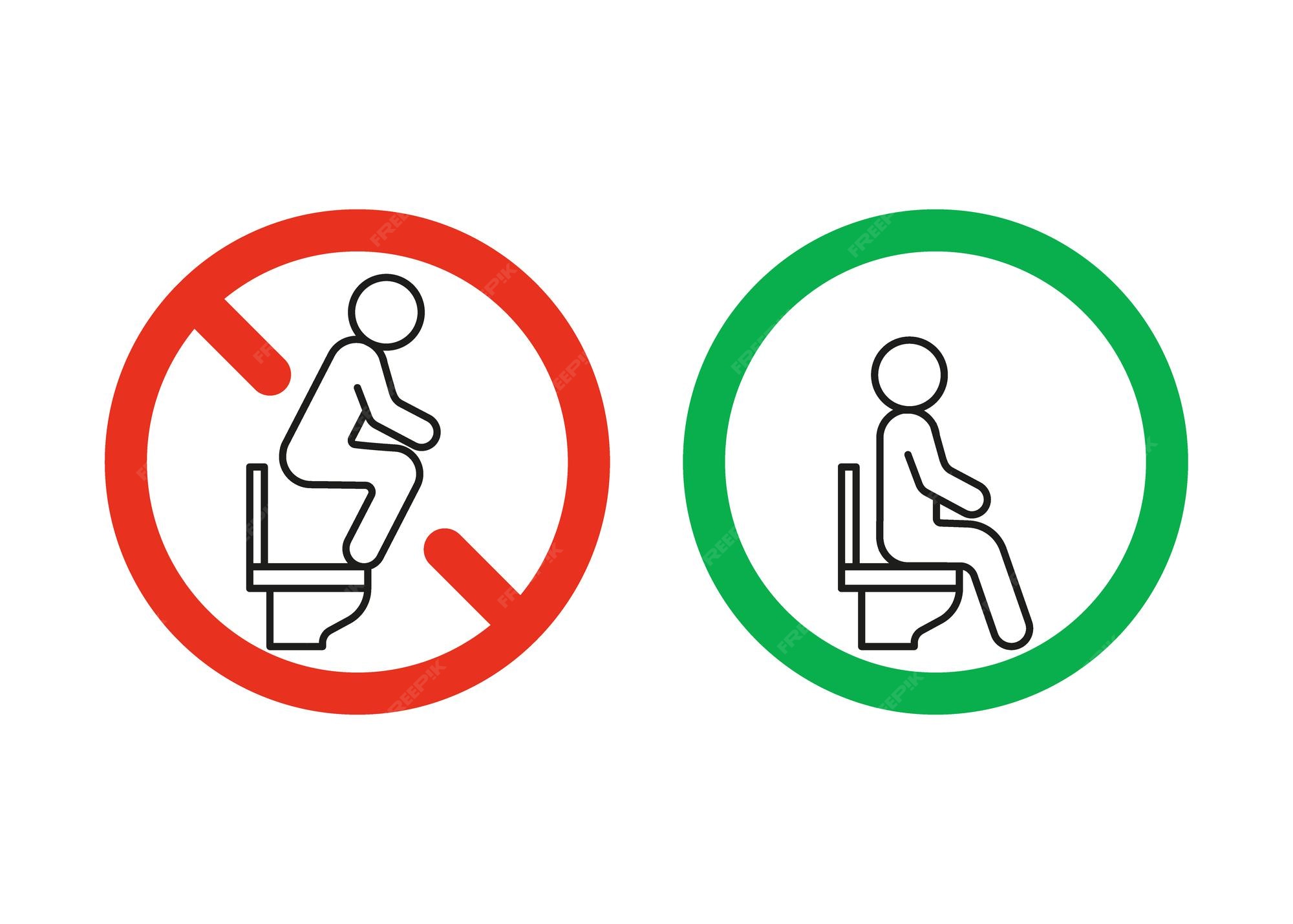
Another important thing to know: even if a country has Western-style toilets, the plumbing may not handle toilet paper.
In many parts of Asia, Latin America, and Africa, flushing toilet paper can cause serious plumbing issues. That’s why you’ll often see a trash bin next to the toilet specifically for used toilet paper.
The European bidet

European bathrooms often include an extra fixture called a bidet.
It looks like a very low sink placed next to the toilet. Invented in France in the late 1600s, the bidet is now common in countries like France, Italy, Spain, and Portugal.
How to use the European bidet
- Turn on the water and adjust the temperature.
- Straddle the bidet facing the same direction you would on the toilet.
- Clean yourself using water and soap, adjusting the angle of the faucet if necessary.
- Then dry yourself and turn off the water.
The first time I saw one was in my Portuguese host’s house. I thought it was a sink for disabled people.
Now that I know what it is, I still think it’s a bit of a waste of bathroom space when everything could be done directly on the toilet seat.
Sorry, Europeans.
Which brings us to the next type.
The toilet with a spray hose (bum gun)

I may be biased, but this is my personal favorite.
This is the most common toilet setup in my own country, especially in urban areas. It’s basically a Western toilet with a small handheld spray hose attached.
The hose is often called a bidet shower, handheld bidet, or more famously, the bum gun.
It serves the same purpose as the European bidet but takes up far less space.
You’ll find this system in many Southeast Asian and Middle Eastern countries. It’s especially common in countries with large Muslim populations because Islamic hygiene practices emphasize washing with water after using the toilet.
I’m not particularly religious, but I grew up using the water hose. So when I traveled to a country without it for the first time, I had to resort to filling an empty bottle at the sink and using that instead.
How to use the spray hose
- When you’re ready to wash, grab the hose and aim it at the area you want to clean.
- Press on the lever or button to release water. Be careful — sometimes the pressure is set on high.
- Once the water has washed away most of the… evidence, you can use your other hand to make sure everything is properly clean. Keep the water running while you do this.
- Then release the lever, place the hose back on its holder, and dry yourself with toilet paper if available.
Some bathrooms don’t provide toilet paper. In that case, you either learn to manage without it or remember to bring your own.
A quick cultural note: the hose is usually placed on the right-hand side because the right hand holds the hose while the left hand is used for cleaning. This is why in many Muslim cultures the left hand is considered inappropriate for eating, shaking hands, or passing objects.
Also, just to clarify:
The spray hose is for washing your private areas.
It can also help mask the sound of a particularly dramatic splash.
What it is not for: drinking or showering.
Please do not do either of those things.

The squat toilet

Ah yes. The one many Western travelers fear the most.
The squat toilet is often called the “Asian toilet,” although it’s also widely used in Africa and parts of the Middle East, and even in some rural parts of Europe.
In large cities across Asia and Africa, public bathrooms usually provide both squat and Western toilets so people can choose whichever they prefer.
So why do many people prefer squatting?
One reason is hygiene. With a squat toilet, your body never touches a shared surface that has hosted hundreds of other bare backsides before yours.
Another reason is health. Squatting naturally relaxes pelvic muscles and can make bowel movements easier.
In fact, there are now products like toilet stools designed to recreate the squatting position while using Western toilets.
How to use the squat toilet
- Face forward and lower your pants to your knees (rolling them up helps keep them clean).
- Place your feet on the grooved footrests on either side and squat over the hole.
- For balance, try to keep your feet flat, lean slightly forward, and rest your arms on your knees.
- When you’re finished, use water from the bucket to wash yourself from the front. This takes practice. Repeat as many times as needed. You can also use your left hand to help clean the area.
- Then use toilet paper if available and flush by pouring water from the bucket into the bowl.
Squatting definitely takes some getting used to. I’m Asian, but because I grew up in the city without a squat toilet at home, I’m still not particularly graceful at it.
PRO TIP #1: (Very important) Empty your pockets before using a squat toilet. Don’t learn this the hard way.
PRO TIP #2: Many Asian households don’t wear shoes indoors, but bathrooms often have designated slippers because the floors can be wet. These slippers are strictly for the bathroom. Do not wander around the house wearing them.
The combination toilet (Anglo-Indian toilet)

In India, there’s an interesting hybrid called the Anglo-Indian toilet.
It allows you to either sit like a Western toilet or squat on raised platforms.
It’s slightly more precarious than a regular squat toilet but still safer than attempting to squat directly on a Western toilet seat as this one has wider platforms for your feet.
If you choose the squatting option, please wipe your shoe prints off the seat before leaving. Your fellow bathroom users will thank you.
The Indian public urinal

This is something I’ve personally only seen in India.
Instead of being inside a restroom, some public urinals are standalone structures out in the open.
Sanitation has historically been a major challenge in densely populated areas of India, and public facilities can be… intense.
If you’re traveling there, the cleanest toilets are usually found in higher-end restaurants or hotels. Buying a drink or meal is often the easiest way to gain access.
The African pit latrine
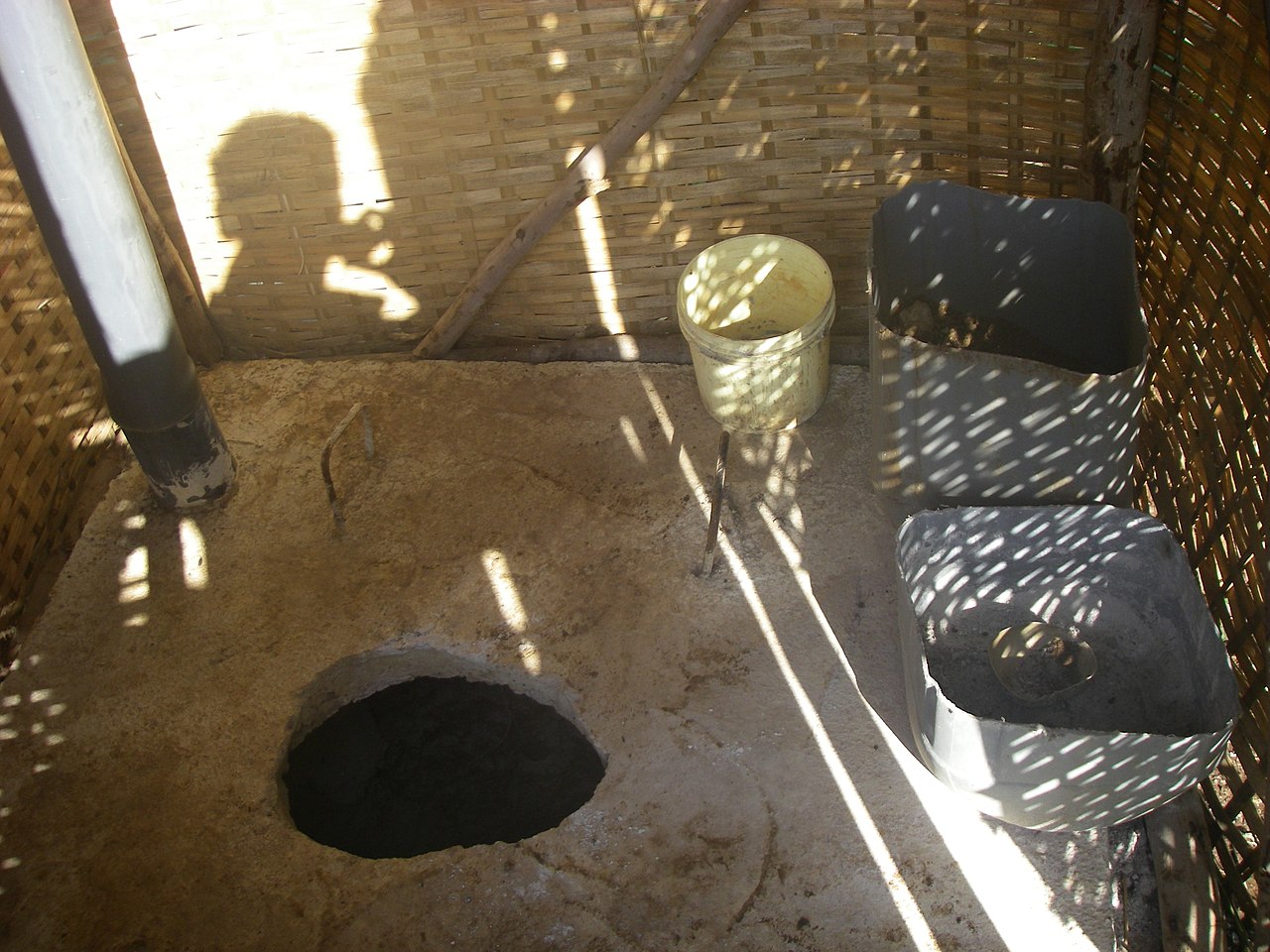
A pit latrine is a simple toilet consisting of a deep hole in the ground — typically about three meters deep and one meter wide.
Some have a toilet seat or squatting pan installed above the pit, while others are just a concrete or wooden slab with a small hole.
How to use the African pit latrine
Use it similarly to a squat toilet.
Instead of washing with water, people usually clean themselves with toilet paper, leaves, or newspaper.
Be careful, because in some places the structures are poorly built and can be unstable. Several countries are actively replacing pit latrines due to safety concerns.
The Japanese smart toilet

Japanese toilets exist on an entirely different technological plane. Many come with a control panel that has more buttons than your washing machine.
Even basic models allow you to adjust water pressure, water temperature, and the angle of the cleaning nozzle.
More advanced versions include:
- heated seats
- deodorizing sprays
- artificial flushing sounds for privacy
- built-in dryers
No toilet paper required.
Most of the buttons are labeled in Japanese, but the icons are usually clear enough to figure out.
Smart toilets are also common in South Korea.
The natural toilet
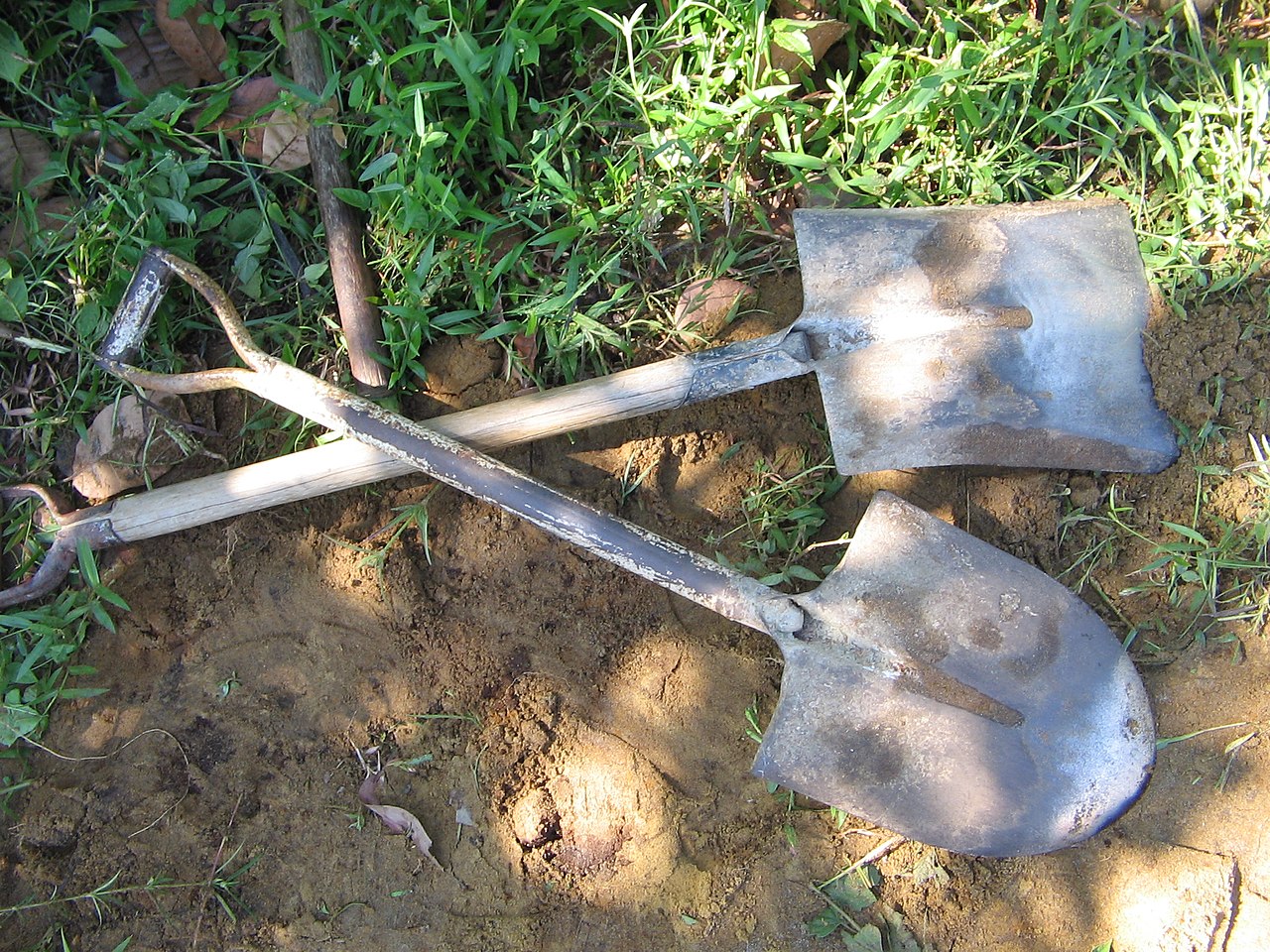
Finally, we arrive at the most universal toilet of all.
Nature.
No matter how fancy your preferred toilet is, you’ll eventually meet this one if you go camping or hiking long enough.
When that happens, remember the golden rule:
Do your business at least 300 yards away and downwind from your campsite.
Final thoughts
Travel teaches you a lot of things.
Sometimes it’s history, culture, or language. Other times it’s realizing the toilet situation is not what you expected.
If you travel long enough, you’ll eventually encounter most of the toilets on this list. Some will confuse you, terrify you, or spray water in a direction you didn’t anticipate.
But that’s all part of the adventure.
And perhaps a seasoned traveler isn’t defined by how many countries they’ve visited, but how many different toilets they’ve successfully survived.
✈️ Loved this post? Check out my other travel tips!



Wow! This is the best article I have read on the various toilets around the world. It is such an important topic and well done.
Thank you, Stephanie! Glad that you found it useful. 🙂
Pingback: 12 Essential Skills Every Traveler Should Have - Ummi Goes Where?
Coming from Indonesia and now live in the US, I hate it when using the toilet in the mall and water is all over the floor. I agree with you that the bidet is a waste of the bathroom space. Hopefully I don’t have to use the public urinal in India or Africa. I better use the natural toilet. Anyway, I do that when I’m out on the trails. Haha..
Hahaha heavens forbid that you have to use the Indian public urinal. You’re right, I’d rather use the natural toilet instead. But I did have to use the pit latrine in Africa. I don’t know how to describe it – it was not pleasant, but not as bad as I imagined. At least it was dry. 😆
Such a funny and exciting post! And a lot of useful tips about toilets around the world. I still remember the public toilets in India. And combination toilet, where I had to squat because it was so dirty.
Ugh.. hate dirty toilet seats. But I remember toilets in decent Indian restaurants were actually pretty clean. Anyway, glad that you enjoyed reading this article! 😆
This is an interesting read but I agree with you that traveling allowed me to encounter different toilets. I am horrified to use the pit latrine and would definitely avoid places with this.
I remember Couchsurfing in Rwanda and the only option I had was the pit latrine. Tried to avoid it as long as I could but had to admit defeat at last. It wasn’t so bad, but I wouldn’t want to repeat it 😆
One of the most unique articles TBH. One correction, the reason you’ll find bum guns in India and South East Asia, is not because of any religion, but it’s kind of the logical thing you do. When you do your job, washing it is always the hygienic option as compared to using Toilet Rolls. It’s an unnecessary waste of Paper. The Japanese Smart Toilet is something that i’m eager to experience.
Thank you, Arnav! I suppose you’re right, it’s the most logical thing to do – I can’t quite grasp the idea of cleaning something without water 😄. It’s just that I often find toilets with water hose in predominantly Muslim countries, like Malaysia, Indonesia, and Brunei. I may be wrong but in Thailand, Singapore, Laos, Cambodia, etc, I remember some of their toilets didn’t have water hose.
Wish I had read this before some of my travels – I always find the various bathrooms around the world to be super fascinating. I ran into some of these on my travels and as a westener did struggle sometimes with the squat toilet. But needs must and I figured out how to use it on the fly – this article would have prepared me better though! My favourite was the South Korean Smart Toilet though, that was fantastic, and ours was heated seats as well which I enjoyed in a cold Korean winter.
You’re definitely not alone, Jamie! Even as an Asian living in Asia, I still have problem with the squat toilet.
The Korean/Japanese smart toilets are the best, for sure. Love the heated seats, although the first time I sat on one, I thought the heat was from somebody else who had just sat on it before me 🤭
Ahoy fellow Malaysian – Well, I love how you took the toilet topic by the horns! How marvelous and oh so important. I am one who really dislikes to use public toilets – but it is unavoidable and good to know how to use the different types in different regions. When using a clean toilet , I still prefer the ones with the hose or spray that we grew up with in Malaysia. I feel much more in control and cleaner using this method. Also , no need to hoard toilet papers in times of Corona!
Oh I dread using public toilets too. And like you, my favorite is still the toilet with bum gun. Took me awhile to get used to the ‘dry cleaning’ method when I first started traveling outside of Malaysia. I’m better at it now but it still doesn’t feel clean enough and I usually end up using too much toilet paper 😞
I think, I am reading the most unique most now. Never thought of this, but toilet is really a crucial thing and during travel it is very difficult to adjust to different style of seating. We Indians do have have habit of toilet roll or tissue paper, so always look for spray hose or jet pipe for cleaning which I rarely find in western countries. Loved reading all comments and all toilet experiences with this post.
Hey, Yukti! Thank you for your comment. Glad you enjoyed this article. Like you, I also struggled learning to use only toilet paper to clean myself. No matter how far and wide I’ve traveled, I think I will always prefer the toilet with a spray hose. 😄
This is such a funny and important post. I feel it is one of those things that we struggle when we travel around the World with different styles of toilets. I find it so hard when I am on the road with dirty toilets such a turn off. But yes these tips help and I generally like the squatting toilets when I am traveling as there are less chances of getting any infections.
Ya, squatting toilets are definitely more hygienic, but despite being Asian, I still can’t get the hang of it. Don’t know how to aim properly or how to clean myself without making a huge mess 😆
Wow what a beautiful post. On something no one writes about. It’s really informative and useful.Toilet seat is perhaps the biggest worry when it comes to sharing toilets.
Thank you, Subhashish! It’s true, toilets are something I dread when traveling abroad, unless I’m in Japan or South Korea. 😄 I hope you found the article useful!
Pingback: Sleeping on Straw in Switzerland – Ummi Goes Where?
Pingback: Drinking Marijuana Tea in Kashmir, India – Ummi Goes Where?
Ada lagi ke ek orang duduk atas mangkuk jamban tu? adoii dulu kecik-kecik yaa, jakun mula bila abah tukar yang duduk, so pi cangkungnya atas tu, kemudia dah tau oooo salah rupanya hahaha.. tapi Sis lebih selesa guna yang cangkung.. cuma susah nak jumpa kan, rumah Mak Sis aje ada, satu duduk satu cangkung..
Ada lagi sis orang yang cangkung atas tandas duduk. Kalau tengok tandas di shopping mall besar pun kadang2 nampak kesan tapak kasut pada mangkuk tandas. Agak memalukan la kalau pelancong luar tengok. Tapi biasanya tempat-tempat awam di Malaysia ni ada sediakan kedua-dua jenis tandas untuk keselesaan semua.
Nice write up ! I hate the bidet. Hahaha. I was living in the US for 6 months and i had difficulties when it comes to pooping. The first two weeks was very hard for me but as the time passed by, i get used to it. But still, i prefer the traditional toilet where there is water hose next to it. Hahaha
Same here, Zharif! Although I’ve tried all of the toilets listed above and gotten used to some of them, I still prefer the one with water hose! 😀
My first time see a combination of western and squat toilet. I’m super comfortable using squat toilet. I only use western type at my house bcs I cannot change the design but if I’m at the mall or elsewhere, I prefer to hold it till I found squat toilet haha
Oh, then we’re the complete opposite, Farhana. I grew up with a Western toilet. Never really got used to the squat one. And it’s a pain to get up from the squatting position. Hahah. Perhaps age is catching up on me.
paling lemah pi oversea sebab bidet tu. haha sebab dah biasa ada hose kan. india and africa tu serammm haha. and PALING best of course natural. i paling suka bila camping sebab sungai tu sebagai toilet. puasssa rasa muahaha
Hahaha, Bae! Setakat ni pengalaman saya guna natural toilet tak best sangat. Sebab takde air. 1st time, masa kat atas gunung Rinjani, 2nd time kat padang pasir, 3rd time kat savannah Afrika. Haha. Air minum pun kena jimat, so terpaksa la pakai toilet paper je.
I would say that the one with the hose is the best toilet. And I will be dreading going to the toilet if I’m in Africa or India.
And I always bring bottles of water when I go to the toilet anywhere outside Malaysia – just in case
I agree, Rawlins. The one with a hose is always the best. And I dread just thinking about the ones in India and Africa. All these toilets that we encounter abroad make us appreciate Malaysia more, don’t you think?
Macam-macam jenis toilet ada ni ha.. Dari moden sampai toilet kampung.. India and africa, seram betul toilet dia.
Memang seram, Nadia. Tapi bila dah travel kat sana, nak buat macam mana, kan. Terpaksa la guna jugak, kecuali yang public urinal tu. Lalu dekat pun tak sanggup.
Using toilet is also an art when we travel around the world kan.. aduiii, i can’t imagine how to use some of the toilet aduiii… even kat Malaysia pun, i only go for toilet ala2 Korea and Japan gitchew! if not i sanggup balik rumah dulu haha…
Hahaha, sama la actually, Kitkat. At some places, mmg rasa tak selera nk guna toilet dia, i would rather just hold it in till I reach home. But when traveling, you don’t really have a choice.
This is indeed an interesting article with so many useful tips about toilets haha. well, learned a lot from you today, now i know what to expect when I travel! 🙂
Haha, glad to know, Grace. Hope the new knowledge will come in handy someday.
Menarik article ni ..baru tau toilet toilet negara lain..kite jarang travel..kalau thai yg iena pernah pergi dekat tandas petrol station takde waterhost..korea best toilet dia kan hehe
Ya, Iena. Saya perasan kalau dekat Southeast Asia ni, di negara2 bukan majoriti Muslim selalunya tandas diorang takde water hose. Toilet paper je. Yg Korea dan Jepun tu memang best.
Pingback: Kandy to Ella Train – A Guide to Sri Lanka’s Most Scenic Train Ride – Ummi Goes Where?
Pingback: Panduan Menggunakan Tandas di Seluruh Dunia – Ummi Goes Where?
Love this post! I was shocked when I had to pee in a hole in Turkey, but now know that it’s a common thing. It took a while to get used to though!
Ahaha, yes, Nina. It does take some getting used to, even for an Asian like myself. 😀
I had a very horrible experience with a squatting toilet in Tunis. I was staying in an extremely cheap hotel one night and had tummy trouble so I had to use the toilet often, which was being shared by between 10 or 20 people. It got clogged, and each time I went the pile of poop was higher. The smell alone was horrendous, but I had to contort myself to squat and somehow keep my self above the mountain of poop.
Oh wow, that sounds absolutely brutal 😬! Squatting toilets in shared or budget accommodations can definitely be a challenge, especially when hygiene isn’t great. Experiences like yours really show how unpredictable traveling can be. It’s part of why I love documenting my travels, even less glamorous moments like this. Thanks for sharing your story!
Here in Finland almost all toilets have spray hose and it is very common in other nordic countries too.
Ohh, I’ve never been to Nordic countries (yet), but that’s good to know!